Saturday, December 18, 2010
Made Me Glad (Hillsongs)
I will bless the Lord forever
And I will trust Him at all times
He has delivered me from all fear
And he has set my feet upon a rock
And I will not be moved
And I'll say of the Lord....
You are my shield
My strength
My portion
Deliverer
My shelter
Strong tower
My very present help in time of need
Whom have I in Heaven but you?
There's none I desire beside you
You have made me glad
And I'll say of the Lord....
Wednesday, December 15, 2010
Repentance: Key to revival (The Pyongyang example)
While in Korea, we spent some days at the Osanri prayer mountain. Whilst there, I am always struck and deeply inspired by the fervency with which Koreans cry out to the Lord in prayer. It's hard not to hear these prayers - they are shouted from the mountaintops (literally!) and resound beyond the confines of individual prayer ghettos. It seems to me these prayers are not just uttered; they almost rise from deep within the believers' spirit. It's just incredible to behold.
Another reason I'm inspired by this is that I've been thinking a lot about revivals -and why the Lord has poured out His Spirit to sweep in great numbers into His Kingdom in some lands. As far as I know, these God-breathed revivals are few and far between in modern history ... the Azusa Street revival, the Welsh revival etc, are a few that come to mind. So one question I had in my mind was: How did Korea get Christianised? It's an Asian nation and the spread of Christianity in the East largely occurred in the last 50 years. We had the privilege of dining with a full-time Christian worker in Seoul, whilst there, and she shared that Korea was blessed by the presence of Western missionaries. What surprised me though was when she shared that the first major revival in Korea took place in Pyongyang.
This is what I learnt from my research: the Pyongyang revival of 1907 was triggered by a repentance movement. As people confessed their sins to each other and the Lord, the Holy Spirit fell.
Yahweh is near to those who have a broken heart, and saves those who have a crushed spirit (Psalms 34:18)
Is genuine repentance, hearts broken by our sin, a key to revival in the land?
Article from OMF:
What is the extent of God’s grace and what are its limits? Sometimes we have the tendency to forget that God delights in working the impossible in the most difficult of times. And, indeed, one of the great reminders of His powerful grace and His perfect timing is the Pyongyang Revival, a dramatic revival in 1907 that was later called the “Pentecost of Pyongyang” and which was one of the reasons Pyongyang came to be called the “Jerusalem of the East.”
The northern region of Korea in the early 1900s faced many struggles and was a seemingly unfruitful place for the gospel, in much the same way that the Democratic People’s Republic of Korea (DPRK) is perceived today. In 1905, at the end of the Russo-Japanese war, Korea was placed under Japanese protectorate (and later fully annexed by Japan in 1910); this led to a general feeling of disillusionment and despair in the country. Pyongyang, the country’s third largest city at the time, had been known as “the most wicked city in Korea” and “a city of hopelessness” until 1892 when the gospel began to be preached there. By the end of 1906 there were 6,000 Christians out of a population of 40,000, but about two-thirds of all businesses were drinking establishments and the city’s reputation for ungodliness remained.
The beginnings of revival in Korea started in Wonsan (on the Eastern coast of what is today the DPRK) in 1903, with a small group of missionaries who felt led to confess their sins. Similar meetings were held in a few major cities in 1904 and the spirit of confession and repentance began to spread. In 1905 the revival movement spread over the whole Korean peninsula, continued to grow in 1906 and peaked in 1907 in Pyongyang.
The Pyongyang revival was precipitated by reports delivered in 1906 about the manifestations of the Holy Spirit in India and Wales. This caused some Korean Christians to greatly desire the same blessing, for which they began to pray. The revival began in spiritual improvement meetings the missionaries in Pyongyang had planned at the beginning of the year 1907, starting on January 6. People came from as far as 100 miles away to attend the meetings; there were so many attendees from the countryside that locals were barred to make room for visitors. People began these meetings from the start with a great expectation to be blessed by the Spirit, but met for a week with no extraordinary blessings. Saturday, January 12 after the sermon, many testified to a new understanding of what sin was. Then on Sunday, January 13 there was a strange “night of gloom” when everyone had particularly heavy hearts. The following day the missionaries met and prayed for God’s blessing; and that night those who entered the church felt that the place was full of God’s blessing.
As the people prayed, a spirit of heaviness and sorrow came upon those present, and all began to confess their sins and repent. “Man after man would rise, confess his sin, break down and weep…Every sin a human being can commit was publicly confessed, that night. Pale and trembling with emotion, in agony of mind and body, guilty souls standing in the white light of judgment saw themselves as God saw them.” The same experience of prayer, confession and repentance stirred by the Spirit was also experienced at the local missionary-run high schools and elementary schools. In some schools as many as 90 percent of students became Christians. The movement continued until 1910 and spread as far as Manchuria and Japan.
“The impact of the revival movement at Pyongyang was enormous. It changed not only the Christians of Pyongyang but also its entire society. The vast number of bars was gradually closed because business had become unprofitable. The city of Pyongyang cleansed her past and restored her reputation. The result of the meetings was that about 2,000 persons decided to accept Christ as Savior.”
From 1906-1910 in all of Korea there were 79, 221 new converts. There was also a new zeal for sharing Christ with others. Many who couldn’t contribute funds to the work contributed “days,” going outside their local areas to preach the gospel at their own expense, with the result that almost every house in Korea was visited. Clearly believers in Pyongyang in 1907 experienced one of the most remarkable Christian revivals in history.
Now, more than one hundred years later, God is at work in North Korea and is looking for believers worldwide to answer his call. The Lord is establishing ways for Christians to establish relationships that will build a foundation for future work. From the human perspective, revival in North Korea may seem slim. But our God is a God of great wonders and divine timing. Join with us praying for His grace to fall once again on North Korea.
Another reason I'm inspired by this is that I've been thinking a lot about revivals -and why the Lord has poured out His Spirit to sweep in great numbers into His Kingdom in some lands. As far as I know, these God-breathed revivals are few and far between in modern history ... the Azusa Street revival, the Welsh revival etc, are a few that come to mind. So one question I had in my mind was: How did Korea get Christianised? It's an Asian nation and the spread of Christianity in the East largely occurred in the last 50 years. We had the privilege of dining with a full-time Christian worker in Seoul, whilst there, and she shared that Korea was blessed by the presence of Western missionaries. What surprised me though was when she shared that the first major revival in Korea took place in Pyongyang.
This is what I learnt from my research: the Pyongyang revival of 1907 was triggered by a repentance movement. As people confessed their sins to each other and the Lord, the Holy Spirit fell.
Yahweh is near to those who have a broken heart, and saves those who have a crushed spirit (Psalms 34:18)
Is genuine repentance, hearts broken by our sin, a key to revival in the land?
Article from OMF:
What is the extent of God’s grace and what are its limits? Sometimes we have the tendency to forget that God delights in working the impossible in the most difficult of times. And, indeed, one of the great reminders of His powerful grace and His perfect timing is the Pyongyang Revival, a dramatic revival in 1907 that was later called the “Pentecost of Pyongyang” and which was one of the reasons Pyongyang came to be called the “Jerusalem of the East.”
The northern region of Korea in the early 1900s faced many struggles and was a seemingly unfruitful place for the gospel, in much the same way that the Democratic People’s Republic of Korea (DPRK) is perceived today. In 1905, at the end of the Russo-Japanese war, Korea was placed under Japanese protectorate (and later fully annexed by Japan in 1910); this led to a general feeling of disillusionment and despair in the country. Pyongyang, the country’s third largest city at the time, had been known as “the most wicked city in Korea” and “a city of hopelessness” until 1892 when the gospel began to be preached there. By the end of 1906 there were 6,000 Christians out of a population of 40,000, but about two-thirds of all businesses were drinking establishments and the city’s reputation for ungodliness remained.
The beginnings of revival in Korea started in Wonsan (on the Eastern coast of what is today the DPRK) in 1903, with a small group of missionaries who felt led to confess their sins. Similar meetings were held in a few major cities in 1904 and the spirit of confession and repentance began to spread. In 1905 the revival movement spread over the whole Korean peninsula, continued to grow in 1906 and peaked in 1907 in Pyongyang.
The Pyongyang revival was precipitated by reports delivered in 1906 about the manifestations of the Holy Spirit in India and Wales. This caused some Korean Christians to greatly desire the same blessing, for which they began to pray. The revival began in spiritual improvement meetings the missionaries in Pyongyang had planned at the beginning of the year 1907, starting on January 6. People came from as far as 100 miles away to attend the meetings; there were so many attendees from the countryside that locals were barred to make room for visitors. People began these meetings from the start with a great expectation to be blessed by the Spirit, but met for a week with no extraordinary blessings. Saturday, January 12 after the sermon, many testified to a new understanding of what sin was. Then on Sunday, January 13 there was a strange “night of gloom” when everyone had particularly heavy hearts. The following day the missionaries met and prayed for God’s blessing; and that night those who entered the church felt that the place was full of God’s blessing.
As the people prayed, a spirit of heaviness and sorrow came upon those present, and all began to confess their sins and repent. “Man after man would rise, confess his sin, break down and weep…Every sin a human being can commit was publicly confessed, that night. Pale and trembling with emotion, in agony of mind and body, guilty souls standing in the white light of judgment saw themselves as God saw them.” The same experience of prayer, confession and repentance stirred by the Spirit was also experienced at the local missionary-run high schools and elementary schools. In some schools as many as 90 percent of students became Christians. The movement continued until 1910 and spread as far as Manchuria and Japan.
“The impact of the revival movement at Pyongyang was enormous. It changed not only the Christians of Pyongyang but also its entire society. The vast number of bars was gradually closed because business had become unprofitable. The city of Pyongyang cleansed her past and restored her reputation. The result of the meetings was that about 2,000 persons decided to accept Christ as Savior.”
From 1906-1910 in all of Korea there were 79, 221 new converts. There was also a new zeal for sharing Christ with others. Many who couldn’t contribute funds to the work contributed “days,” going outside their local areas to preach the gospel at their own expense, with the result that almost every house in Korea was visited. Clearly believers in Pyongyang in 1907 experienced one of the most remarkable Christian revivals in history.
Now, more than one hundred years later, God is at work in North Korea and is looking for believers worldwide to answer his call. The Lord is establishing ways for Christians to establish relationships that will build a foundation for future work. From the human perspective, revival in North Korea may seem slim. But our God is a God of great wonders and divine timing. Join with us praying for His grace to fall once again on North Korea.
Tuesday, December 14, 2010
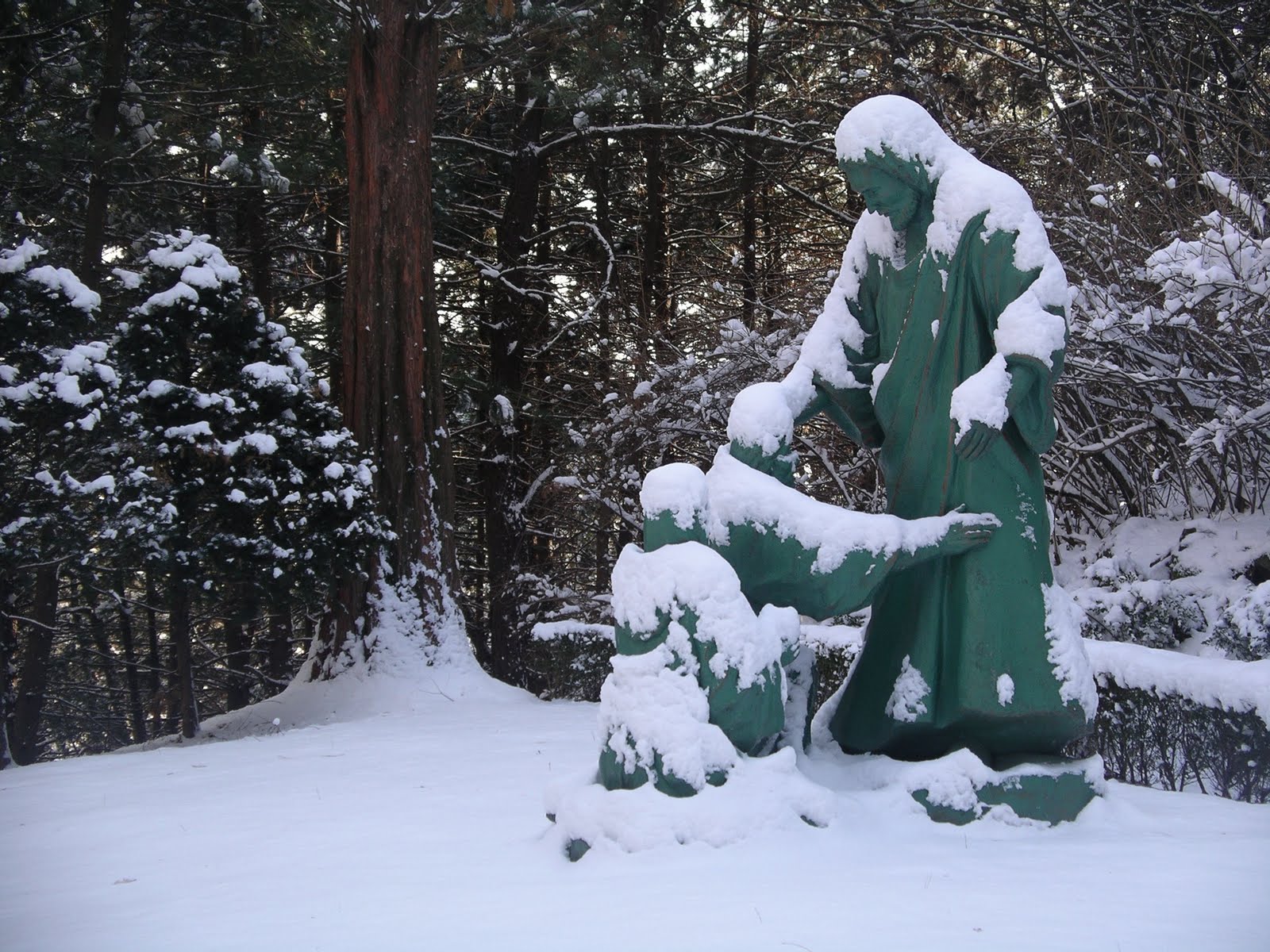
Snowy Kwang Lim Prayer Mountain 2010


December 2010. Just returned from the prayer mountains in Korea. What a wonderful time with the Lord! My friends and I reprised our time last year at the Osanri and Kwang Lim prayer mountains ... to spend some time in quiet solitude before the Lord, to seek His face, and to worship. We had an awesome time fellowshipping with Him and one another. This trip is all the more meaningful to me because we nearly didn't make it - primarily because of me! All this talk about impending war between North and South Korea and military exercises (including the presence of a US warship in the Yellow Seas) a week before our planned departure made me very nervous indeed. I knew that unless we had peace in our hearts, there would be no point going - after all, this is a prayer retreat! But God is good, and He spoke to the 4 of us individually, in ways that would convict our hearts, that He would go before us and protect us.
And then, while we were in Kwang Lim, He surprised and delighted us in just the way Father God would! He sent us snow, that completely transformed the bleak wintry landscape into what I thought was breathtaking beauty. I never thought it possible, reckoning that Kwang Lim was not at a high enough altitude. But it snowed over two days. We worshipped with singing as the snow came down, but also had fun pelting each other with snowballs, and sticking our tongues out to taste the snowflakes :)
Indeed, God does all things well!
That night, I chanced upon Psalm 135:5-7, and mused about how God brought snow out from his storehouse, to bless us with scenery that took our breaths away and brought so much joy to our hearts.
Psalm 135:5-7
5 I know that the LORD is great,
that our Lord is greater than all gods.
6 The LORD does whatever pleases him,
in the heavens and on the earth,
in the seas and all their depths.
7 He makes clouds rise from the ends of the earth;
he sends lightning with the rain
and brings out the wind from his storehouses.




Monday, November 29, 2010
Prayer distilled
Prayer is simply being with God. The greatest thing in life is to be able to touch the heart of God and have His heart touch you.
Thus says the LORD, "Let not a wise man boast of his wisdom, and let not the mighty man boast of his might, let not a rich man boast of his riches; but let him who boasts boast of this, that he understands and knows Me, that I am the LORD who exercises lovingkindness, justice and righteousness on earth; for I delight in these things," declares the LORD. (Jeremiah 9:23-24)
Thus says the LORD, "Let not a wise man boast of his wisdom, and let not the mighty man boast of his might, let not a rich man boast of his riches; but let him who boasts boast of this, that he understands and knows Me, that I am the LORD who exercises lovingkindness, justice and righteousness on earth; for I delight in these things," declares the LORD. (Jeremiah 9:23-24)
Sunday, November 21, 2010
We all have a sacred calling
Two nights ago, I re-watched the movie "Amazing Grace" on DVD. It's an excellent film about William Wilburforce, and his crusade in Britain's Parliament for the abolition of the slave trade. It was a fight that would take many years, and a toll on his health, because Britain and its empire flourished on the slave trade. But God used his man with his great oratory skills and sharp mind, who deeply believed that all man should be free, to accomplish a wondrous thing.
Today, I read about the Moravian Christians in Herrnhut. Herrnhut, Germany is the home of the renowned Hundred-Year-Long Prayer Meeting. In 1722, persecuted Christians from Moravia fled to Saxony and found protection in the domain of the regional Count Nicolas Ludwig von Zinzendorf. Initially, twenty-four people took one hour shifts during which they committed to pray – the Lord’s Watch. More joined the watch and this prayer watch went on unbroken until 1847.
Steve Hickey's website writes: "As Moravians at Herrnhut started to sense God’s missionary call to take the good news to the lost, they would hold funerals for the missionaries before they sent them off to places like Jamaica. (We found Moravian missionary graves when we were in Jamaica a couple years ago!) Imagine holding a funeral for someone who is about to leave because it was understood that the call of Jesus was to go give your life reaching lost people and that you’d not return in this life. To reach the slaves in Jamaica, the Moravian missionaries would sell themselves into slavery as it was the only way to gain access to Caribbean slaves. Stories of supernatural visitations and provision accompany each missionary account of the Moravians."
John Wesley wrote that he was led to Christ by a Moravian missionary from Herrnhut while sailing on a ship to America. When the ship was nearly overtaken by a storm, and he and the other passengers panicked, however the Moravian fellow on the ship was calm, had peace and prayed. In his revivals Welsey often talked about the “warming heart” moment of his born-again experience with the Moravian missionary."
I was deeply struck by this. God used lives given to Him to accomplish His purposes as the slave trade was going on. Moravian missionaries who were willing to sell themselves into slavery to reach the slaves. Full-time missionaries willing to give their all. And one William Wilberforce in government to eventually have slavery abolished altogether. His is not a secular pursuit either.
As Ravi Zacharias put it in "The Grand Weaver", "Because we are all priests before God, there is no such distinction as 'secular' or 'sacred'. In fact, the opposite of sacred is not secular; the opposite of sacred is profane. In short, no follower of Christ does secular work. We all have a sacred calling."
Today, I read about the Moravian Christians in Herrnhut. Herrnhut, Germany is the home of the renowned Hundred-Year-Long Prayer Meeting. In 1722, persecuted Christians from Moravia fled to Saxony and found protection in the domain of the regional Count Nicolas Ludwig von Zinzendorf. Initially, twenty-four people took one hour shifts during which they committed to pray – the Lord’s Watch. More joined the watch and this prayer watch went on unbroken until 1847.
Steve Hickey's website writes: "As Moravians at Herrnhut started to sense God’s missionary call to take the good news to the lost, they would hold funerals for the missionaries before they sent them off to places like Jamaica. (We found Moravian missionary graves when we were in Jamaica a couple years ago!) Imagine holding a funeral for someone who is about to leave because it was understood that the call of Jesus was to go give your life reaching lost people and that you’d not return in this life. To reach the slaves in Jamaica, the Moravian missionaries would sell themselves into slavery as it was the only way to gain access to Caribbean slaves. Stories of supernatural visitations and provision accompany each missionary account of the Moravians."
John Wesley wrote that he was led to Christ by a Moravian missionary from Herrnhut while sailing on a ship to America. When the ship was nearly overtaken by a storm, and he and the other passengers panicked, however the Moravian fellow on the ship was calm, had peace and prayed. In his revivals Welsey often talked about the “warming heart” moment of his born-again experience with the Moravian missionary."
I was deeply struck by this. God used lives given to Him to accomplish His purposes as the slave trade was going on. Moravian missionaries who were willing to sell themselves into slavery to reach the slaves. Full-time missionaries willing to give their all. And one William Wilberforce in government to eventually have slavery abolished altogether. His is not a secular pursuit either.
As Ravi Zacharias put it in "The Grand Weaver", "Because we are all priests before God, there is no such distinction as 'secular' or 'sacred'. In fact, the opposite of sacred is not secular; the opposite of sacred is profane. In short, no follower of Christ does secular work. We all have a sacred calling."
"The World is a great liar" - Peggy Noolan
Am presently reading management guru Tom Peter's book "The Little Big Things - 163 Ways to Pursue Excellence". For a management book, it's incredibly filled with biblical principles! Since turning 35 this week, I've been thinking a lot about legacy. Perhaps it's triggered by the notion that if God lets me live to 70, I'm half-way there. Time to think about legacy!
Here's a quote by Peggy Noolan in the book that made me think this morning. It says "The world is a great liar". How true. In the financial world I'm in, success is measured by mind-boggling pay checks and bonuses Wall Street used to pay. These days it's more moderate. Two years back, I sat in the memorial service after our CEO passed on from leukemia. I knew him briefly and he was a good man. What struck me was that although he was at the pinnacle of his career; had reached the height of his profession; was the leader of many thousands; during the eulogies, no one mentioned how brilliant, or bright he was. Everyone remembered him for the good man he was.
This week, Credit Suisse's former Chairman of investment banking Paul Callelo passed on. He was 49. The newspapers eulogised him, for being a rare-breed banker; one who was ethical, and who loved people. Even in an industry that seems to worship money, when all is said and done, it honours the men and women who exemplify goodness and kindness.
Here is what Peggy Noolan says:
"In a way, the world is a great liar. It shows you it worships and admires money, but at the end of the day it doesn't. It says it adores fame and celebrity, but it doesn't, not really. The world admires, and wants to hold onto, and not lose, goodness. It admires virtue. At the end it gives its greatest tributes to generosity, honesty, courage, mercy, talents well used, talents that, brought into the world, make it better. THat's what it really admires. That's what we talk about in eulogies, because that's what's important. We don't say, "The thing about Joe was he was rich." We say, if we can, "The thing about Joe was he took care of people."
Here's a quote by Peggy Noolan in the book that made me think this morning. It says "The world is a great liar". How true. In the financial world I'm in, success is measured by mind-boggling pay checks and bonuses Wall Street used to pay. These days it's more moderate. Two years back, I sat in the memorial service after our CEO passed on from leukemia. I knew him briefly and he was a good man. What struck me was that although he was at the pinnacle of his career; had reached the height of his profession; was the leader of many thousands; during the eulogies, no one mentioned how brilliant, or bright he was. Everyone remembered him for the good man he was.
This week, Credit Suisse's former Chairman of investment banking Paul Callelo passed on. He was 49. The newspapers eulogised him, for being a rare-breed banker; one who was ethical, and who loved people. Even in an industry that seems to worship money, when all is said and done, it honours the men and women who exemplify goodness and kindness.
Here is what Peggy Noolan says:
"In a way, the world is a great liar. It shows you it worships and admires money, but at the end of the day it doesn't. It says it adores fame and celebrity, but it doesn't, not really. The world admires, and wants to hold onto, and not lose, goodness. It admires virtue. At the end it gives its greatest tributes to generosity, honesty, courage, mercy, talents well used, talents that, brought into the world, make it better. THat's what it really admires. That's what we talk about in eulogies, because that's what's important. We don't say, "The thing about Joe was he was rich." We say, if we can, "The thing about Joe was he took care of people."
Saturday, November 20, 2010
Quotes from Robert Murray McCheyne
Today, I read an excerpt of the life of Scottish preacher and revivalist Robert Murray McCheyne, and was very inspired by the man. He died at 29 but left a deep impression.
He made prayer, meditation and self-discipline key aspects of his work throughout his life. His usual daily pattern was to rise at 6:30 am and spend two hours in private prayer and meditation (including an hour devoted to the Jews). From 8:30-10 am he had breakfast and family prayers. On Sundays his practice was to spend six hours in prayer and devotional reading.
Here are some of his quotes worth pondering:
"Live so as to be missed.”
“Most of God’s people are contented to be saved from the hell that is outside; they are not so anxious to be saved from the hell that is inside them. Lord, make me as holy as a pardoned sinner can be.”
“If I could hear Christ praying for me in the next room, I would not fear a million enemies. Yet distance makes no difference. He is praying for me.”
“Your own soul is your first and greatest care. Seek advance of personal holiness. It is not great talents God blesses so much as great likeness to the Lord Jesus. A holy pastor is an awful weapon in the hand of God. A word spoken by you when your conscience is clear, and your heart full of God’s Holy Spirit, is worth ten thousand words spoken in unbelief and sin.”
Words worth pondering indeed.
He made prayer, meditation and self-discipline key aspects of his work throughout his life. His usual daily pattern was to rise at 6:30 am and spend two hours in private prayer and meditation (including an hour devoted to the Jews). From 8:30-10 am he had breakfast and family prayers. On Sundays his practice was to spend six hours in prayer and devotional reading.
Here are some of his quotes worth pondering:
"Live so as to be missed.”
“Most of God’s people are contented to be saved from the hell that is outside; they are not so anxious to be saved from the hell that is inside them. Lord, make me as holy as a pardoned sinner can be.”
“If I could hear Christ praying for me in the next room, I would not fear a million enemies. Yet distance makes no difference. He is praying for me.”
“Your own soul is your first and greatest care. Seek advance of personal holiness. It is not great talents God blesses so much as great likeness to the Lord Jesus. A holy pastor is an awful weapon in the hand of God. A word spoken by you when your conscience is clear, and your heart full of God’s Holy Spirit, is worth ten thousand words spoken in unbelief and sin.”
Words worth pondering indeed.
Subscribe to:
Posts (Atom)


